DIY Funeral Program Templates: A Complete Step-by-Step Guide for Families

Creating a funeral program is one of the most personal and emotionally meaningful tasks families face after a loss. During a time filled with grief, time pressure, and many unfamiliar decisions, a funeral program brings structure and calm to the service. It welcomes guests, outlines what will happen, and preserves important details in a keepsake that many families and friends hold onto for years. Because of this, more families today are turning to DIY funeral program templates as a reliable and compassionate solution.
DIY funeral program templates remove the stress of designing from scratch. Instead of worrying about margins, folds, font sizes, or alignment, families can focus on honoring their loved one with thoughtful wording, accurate details, and meaningful photos. Whether you are planning a traditional funeral, a memorial service, or a celebration of life, templates provide a clear starting point that works well even when timelines are short.
What Are DIY Funeral Program Templates?
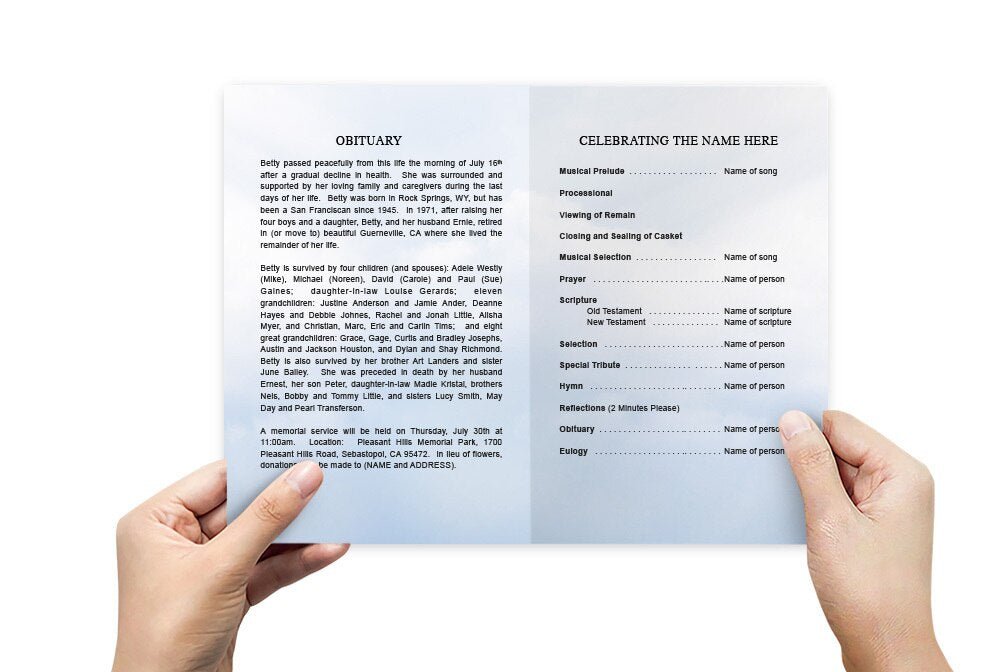
DIY funeral program templates are pre-designed layouts created specifically for funeral and memorial services. These templates already account for printing requirements, folding structure, spacing, and visual balance. Most include clearly marked sections for the cover, order of service, obituary or life tribute, photos, acknowledgments, and optional verses or poems.
Using funeral program templates allows families to bypass technical design challenges. Rather than building a document from a blank page, you simply replace placeholder text and images with your own content. This approach saves time, reduces errors, and produces a professional-looking result without requiring graphic design experience.
Why Families Choose the DIY Approach
One of the biggest reasons families choose DIY funeral program templates is time. Services are often planned within days, and waiting for revisions or approvals can add stress. Templates allow families to work immediately and make updates as details are finalized.
Another reason is control. DIY templates allow families to choose wording that feels natural and sincere, rather than relying on generic phrasing. This flexibility helps the program reflect the personality, values, and life of the person being honored.
Cost is also a factor. While professional services can be helpful, many families find that templates provide the same polished appearance without added expense. The result is a meaningful program that fits both emotional and practical needs.
Choosing the Right Funeral Program Format
Selecting the correct format before you begin editing is essential. The format should match the amount of content you plan to include and how guests will use the program during the service.
Bifold Funeral Programs
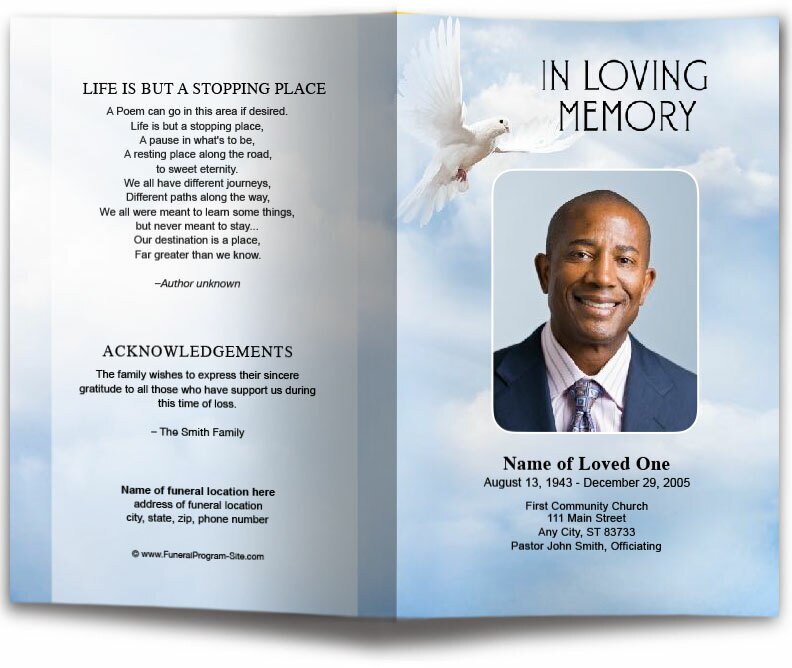
Bifold programs are the most commonly used format. They consist of one letter-size sheet printed on both sides and folded in half. This format usually includes a front cover, inside panels for the order of service and obituary, and a back panel for acknowledgments.
Bifold layouts are familiar, easy to read, and quick to print, making them ideal for most funerals and memorial services.
Trifold Funeral Programs
Trifold programs fold into three vertical panels. They work best for short services with limited text. While visually appealing, trifolds require careful proofing to ensure the panel order reads correctly once folded.
Booklet-Style Funeral Programs
Booklet programs are ideal when families want to include longer tributes, multiple readings, song lyrics, or several photos. This format provides more space and helps keep text readable, especially in low-light settings.
Funeral Program Template Format Comparison
The table below compares common funeral program formats to help families choose the option that best fits their needs.
| Format | Best For | Typical Content | Helpful Notes |
|---|---|---|---|
| Bifold | Most funerals and memorial services | Cover, order of service, short obituary, photos, acknowledgments | Classic and familiar; easy to print at home or locally |
| Trifold | Short services with minimal text | Condensed schedule, brief tribute, quote or verse | Panel order matters; always print a test copy first |
| Booklet | Services with extended content | Long tribute, multiple photos, lyrics, prayers | Prevents small fonts; ideal for keepsake-style programs |
Gathering Content Before You Begin
One of the most effective ways to reduce stress is to gather all content before editing your template. This includes verifying spelling, dates, and service details early in the process.
- Full legal name (confirm spelling carefully)
- Dates of birth and passing
- Service date, time, and location
- Officiant and participant names
- Order of service
- Obituary or life tribute text
- Selected photos
Drafting the obituary or life tribute in a separate document first allows families to review wording thoughtfully before placing it into the template.
Writing Meaningful Wording
The wording in a funeral program does not need to be elaborate to be meaningful. Guests appreciate sincerity, clarity, and warmth. A short life tribute that reflects relationships, character, and values often resonates more than lengthy formal text.
Two to four concise paragraphs are usually sufficient. Mentioning family, passions, community involvement, and personal qualities helps guests remember the individual in a genuine way.
Choosing and Preparing Photos
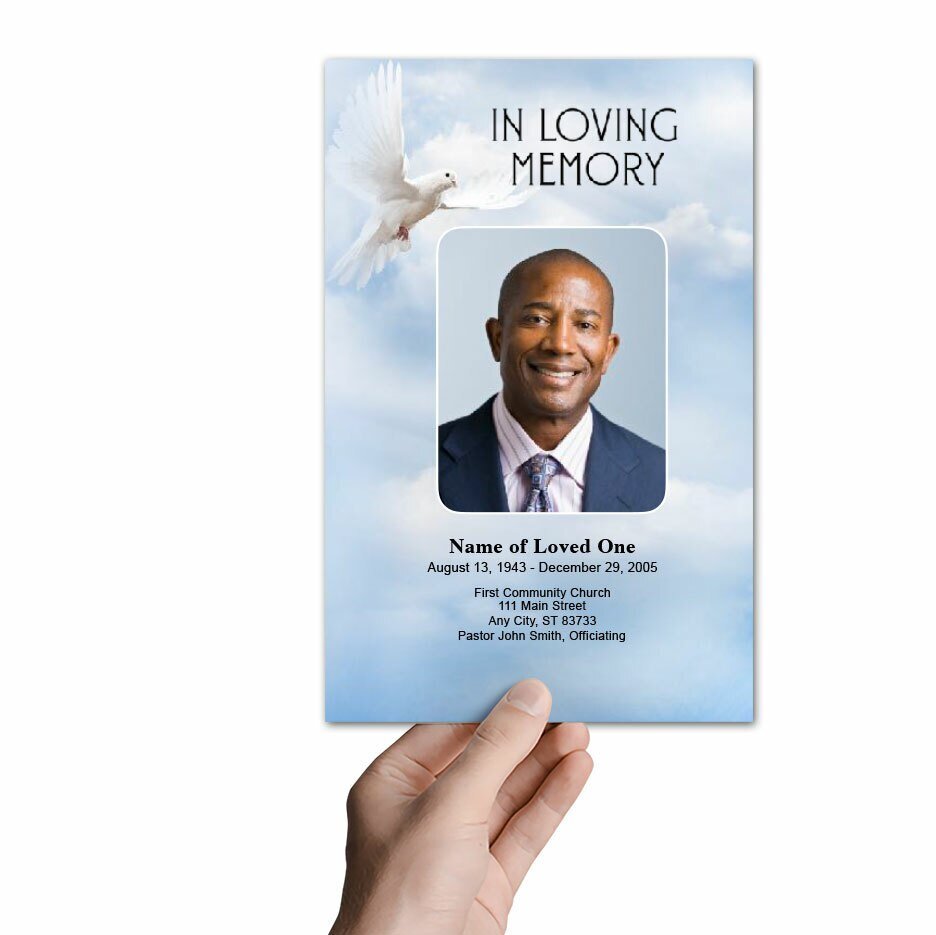
Photos add emotional depth to a funeral program. A clear, well-lit portrait is ideal for the cover. Inside photos can show different stages of life, including family moments, milestones, or everyday activities.
When using DIY funeral program templates, photos should be cropped carefully. Keep faces centered and avoid cutting off important features. Lower-resolution images often work better inside the program rather than on the cover.
Editing and Proofreading
Consistency is key to a polished appearance. Use one or two fonts, maintain even spacing, and avoid overcrowding text. If content feels tight, shorten sections rather than shrinking font sizes.
Proofreading is critical. Names, dates, and service details should be reviewed carefully. Reading the program aloud and asking another person to review it can prevent costly or emotional errors.
Printing and Digital Sharing
Once finalized, save the program as a print-ready PDF. Print one test copy, fold it correctly, and review panel order and readability before printing the full quantity.
Many families also share a digital copy for relatives who cannot attend in person. A PDF can be emailed, texted, or archived for future reference.
Reliable Sources for DIY Funeral Program Templates
Families often appreciate having multiple trusted access points for templates. Reliable resources include DIY funeral program template guides, custom funeral program templates, and downloadable funeral program layouts.
These options ensure families can access templates quickly and confidently, even during busy or emotionally overwhelming moments.
Final Thoughts
DIY funeral program templates offer families a practical and meaningful way to create a polished program without unnecessary complexity. By choosing the right format, preparing content carefully, using sincere wording, and proofreading thoroughly, families can create a program that supports guests and preserves memories.
Whether printed or shared digitally, a thoughtfully prepared funeral program becomes more than a guide—it becomes a lasting tribute to a life remembered.