Funeral Booklets: More Than Just a Program
Christi Anderson
A funeral booklet, sometimes called a memorial or service booklet, serves two key roles. First, it acts as a guide for attendees—helping them follow the order of service, know who will speak, when music or readings happen, etc. Second, it becomes a keepsake—a tangible memory that people often keep, revisit, or share. Because it holds both practical and emotional value, creating a thoughtful booklet can make a significant difference for families and friends in mourning.
Using well-made templates and service providers aids greatly. For example, resources hosted at sites like the ones you shared (e.g. via thefuneralsite. or objectstorage. etc.) give families a structure, design ideas, and often ready layouts to customize. These save time, reduce stress, and help ensure nothing important is left out.
Key Elements to Include in a Funeral Booklet
To build a booklet that feels complete, respectful, and personal, there are certain standard components most booklets include. Choosing which elements matter most for the person being memorialized, and placing those clearly, helps the booklet feel meaningful.
-
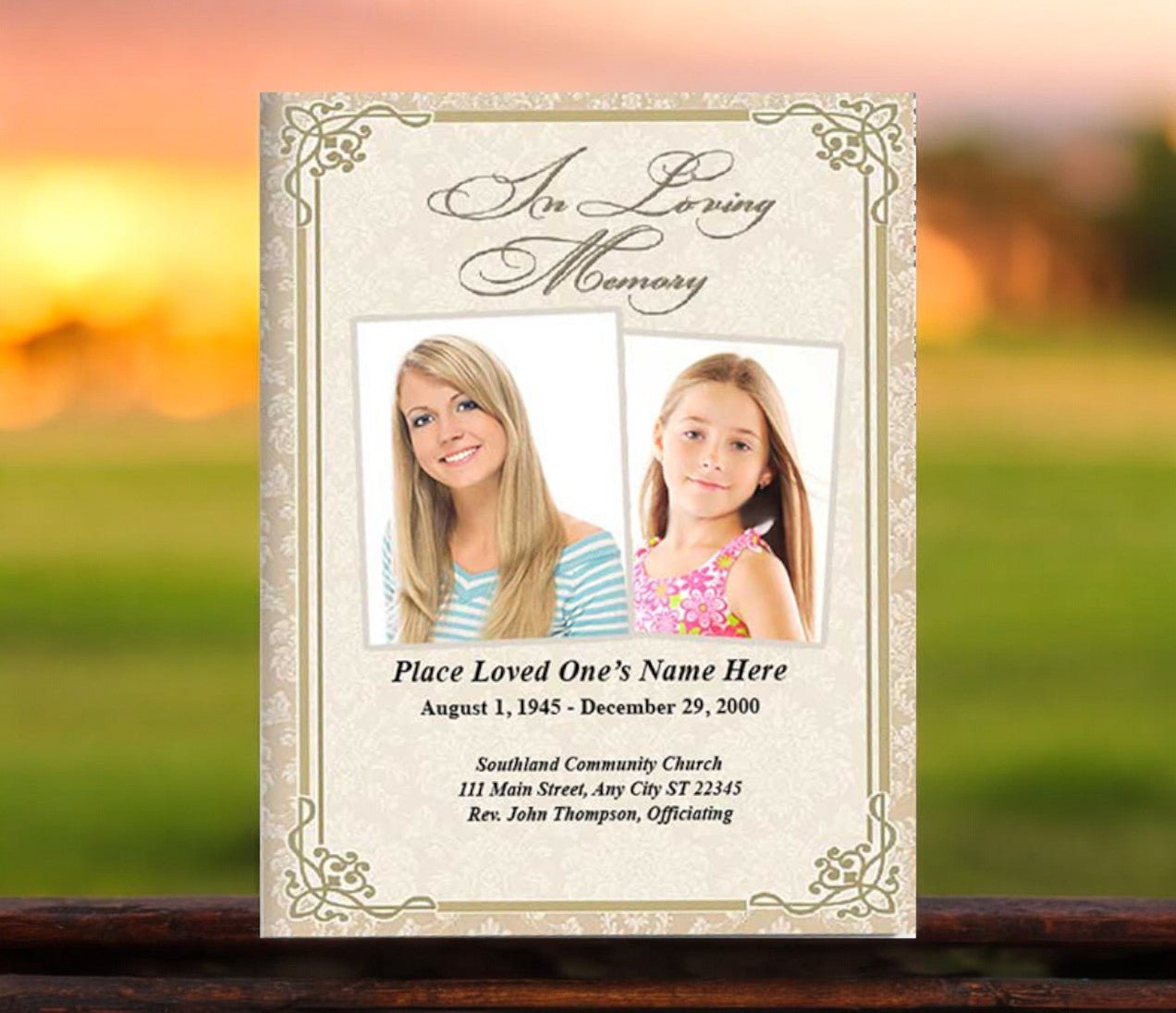
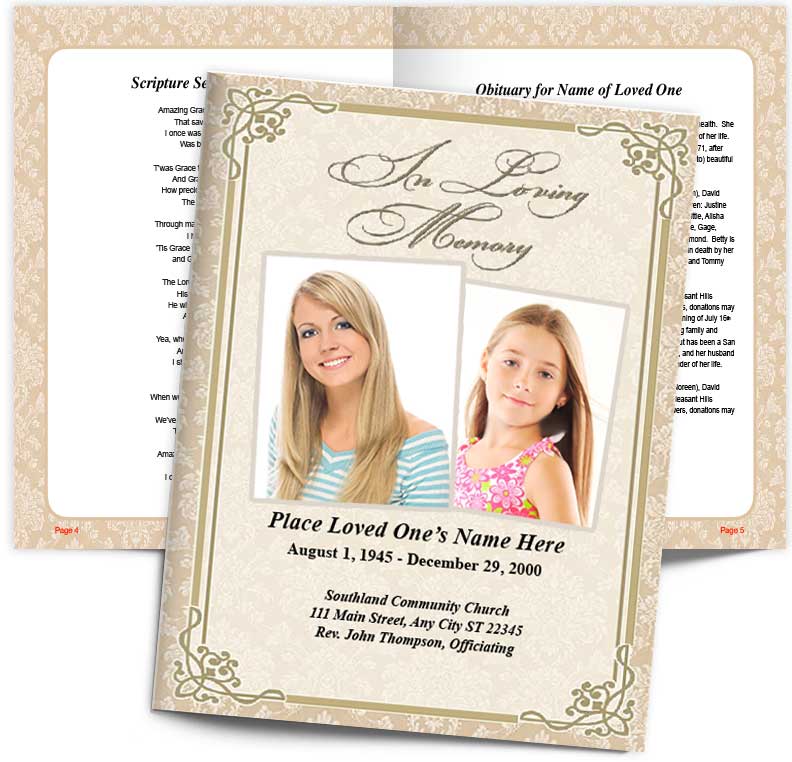
Cover Page
-
Full name of the person who passed, including any preferred names or nicknames.
-
Birth date and death date.
-
Photograph(s)—ideally one clear, meaningful image.
-
A title or subtitle, such as “In Loving Memory of …”, “Celebration of Life for …”, or something more personal (a favorite phrase, quote).
-
-
Introduction or Welcome
-
Often a message from the family or officiant welcoming attendees and thanking them for being present.
-
Sometimes a short invocation or opening prayer if religion or spirituality is part of the service.
-
-
Order of Service
-
Clearly structured outline: what will happen first, then next, etc.
-
Include names of people who will read, speak, perform music.
-
Hymns, songs, readings, special moments (e.g. memory sharing, photo tribute).
-
-
Obituary or Life Summary
-
Brief biography: where the person was born, key life milestones, education, work, community involvement.
-
Hobbies, passions, personal traits—what made them who they were.
-
Surviving family and those predeceased.
-
-
Readings, Poems, Prayers, Quotes
-
Selections meaningful to the deceased or the family.
-
Religious texts or secular poems or favorite sayings.
-
Sometimes song lyrics if guests will follow along or if they are part of the program.
-
-
Photos / Photo Gallery
-
Additional images inside: childhood, family life, hobbies, etc.
-
Captions optional but helpful for context.
-
Use high-quality images so print is clear.
-
-
Acknowledgments / Thank You Notes
-
Expressing gratitude to clergy, caregivers, family, friends.
-
Thank you to guests for being present, traveling, supporting.
-
-
Practical and Closing Information
-
Details about the reception, burial site, or other gathering afterward.
-
Any special instructions (e.g. donations in lieu of flowers).
-
Final message: perhaps a short poem, scripture, or closing sentiment.
-
-
Back Cover
-
Often includes a favorite quotation, a personal message, or another photograph.
-
May include contact or memorial website info if family wishes.
-
Design & Style Tips
Good content is essential, but design makes content accessible, respectful, and beautiful. Some design best practices include:
-
Use legible fonts: avoid overly decorative fonts for body text. Keep headings simple but expressive if desired.
-
Limit the number of different fonts to maybe two or three so the look is cohesive.
-
Choose a color scheme that matches tone: muted, soft, respectful colors often work well, but personalization (favorite colors, themes) can be included.
-
Balance between text and white space: too much text crammed darkly on a page can feel overwhelming; space helps breathing room.
-
Ensure images are good resolution: blurry or pixelated photos detract from the professionalism and the respect the booklet deserves.
-
Paper/print quality matters: heavier paper for covers, quality inner pages; matte or semi-gloss finishes are often preferable for readability and tactile comfort.
-
Proof carefully: misspelled names, wrong dates, missing speakers—these errors are painful later. Having multiple people review is very helpful.
Using Templates & Resources to Streamline the Process
Templates are a big help, especially when time is short or emotional stress is high. The links you provided point to resources that can serve as template files or examples:
-
You can start by selecting a template you like from those shared files (from funeral-site or objectstorage) as a base: layout, margins, where images go, where text sections go.
-
Replace placeholder text with your own: cover, order, biography, etc.
-
Insert your photos, adjust image sizes.
-
Modify fonts or colors if needed to better reflect the personality or style of your loved one.
-
Use the template to generate a draft, share with family for feedback, revise.
Using a template reduces design mistakes (wrong flow, text too small, layout imbalance) because the structure is already built.
Tips for Printing & Finalizing
Once the content/design are ready, finishing well is crucial so the booklet feels dignified and the physical product carries meaning.
-
Export as high-quality PDF if using digital design tools—this helps preserve layout, fonts, and ensures printing accuracy.
-
Choose printer settings carefully (paper size, fold, duplex printing).
-
Use good paper stock: thicker cover paper, sturdy inner pages.
-
Consider finish (matte vs. gloss) depending on photos and lighting at venue. Matte often reduces glare.
-
Order a few extra copies: for family, visitors who didn’t attend, keep one as archive.
-
If budget allows, work with a professional print service—especially if printing many copies or want higher quality.
How “Funeral Program Site” Supports Families Through This Process
When families work with providers like Funeral Program Site, they benefit from years of experience in memorial print design, editing, and quality production. Using the resources you shared, Funeral Program Site likely offers templates or layouts (via your links) that are already set up for thoughtful booklet structure: ease of replacing text, photo placeholders, proper margins and spacing.
They help ensure:
-
Designs that reflect dignity and personal style.
-
Consistency of fonts, colors, photo quality.
-
Proofing support so names, dates, order of service are accurate.
-
Quality printing options that make the booklet something people want to hold onto.
Providers like this reduce the burden on families, letting them focus on remembrance rather than every small design detail.
Emotional & Legacy Value
A funeral booklet does more than just serve on the day of service. It becomes part of the family’s story and archive. Years afterward, people often look back at the booklet to remember the images, the readings, the names of speakers. It helps preserve legacy.
Creating a booklet with care—selecting the right photo, the right quote, the right layout—can offer comfort both during grief and in later moments of reflection. It also gives family members something real to hold onto, something that reminds them of both loss and love.
Final Thoughts
Designing a funeral booklet well requires combining practical detail (what’s happening when, who is speaking) with personalization (photos, biographies, meaningful readings). It means making design decisions that support readability, respect, and aesthetic quality.
When using quality templates and working with experienced resources like those in your links, this process becomes more manageable. Families can create booklets that feel meaningful, dignified, and memorable—something that truly honors the life of the person who’s passed.