Funeral Program Site Brochures: A Complete Guide to Creating Lasting Tributes

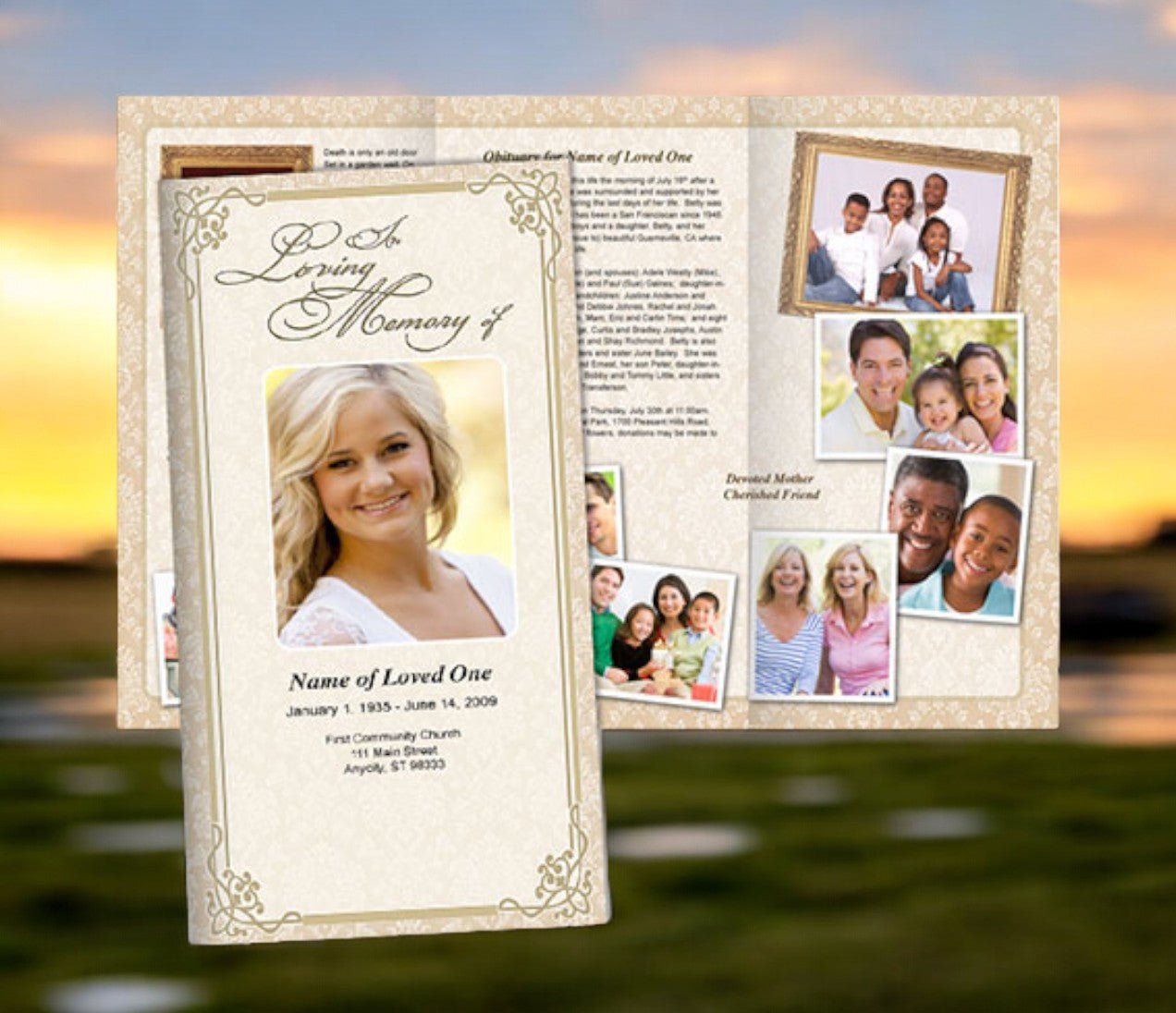
A funeral brochure is far more than a simple piece of paper. It is both a guide for attendees and a cherished keepsake for family and friends who gather to honor a life well lived. Within its pages, we find the essential details of a service—prayers, music, speakers, order of service—as well as personal touches like photographs, favorite poems, and biographical sketches. When thoughtfully designed, a brochure becomes a physical reflection of love, remembrance, and respect.
The Funeral Program Site specializes in creating funeral brochures that combine practical clarity with deep emotional meaning. Families turn to them because they know how to balance design, structure, and personalization with compassion and professionalism. Tools such as this Google spreadsheet and this Google drawing mockup further support families in planning content and layouts, ensuring that the final brochure is accurate, elegant, and deeply personal.
The Purpose of a Funeral Brochure
The role of a funeral brochure is both practical and emotional. On the practical side, it provides attendees with a roadmap of the service. People can follow the order of events, know when hymns will be sung, and understand who will be speaking. This structure reduces uncertainty and helps the ceremony flow smoothly.
On the emotional side, the brochure is a memorial artifact. Guests often tuck it into a Bible, scrapbook, or keepsake box. Years later, families find comfort in looking back at photographs, poems, and written tributes printed in the brochure. It is something tangible to hold onto when memories feel fragile.
When families work with Funeral Program Site, they receive guidance in blending these two roles into a single, polished product—something that serves the needs of the day while offering comfort long after.
Key Components of a Funeral Brochure
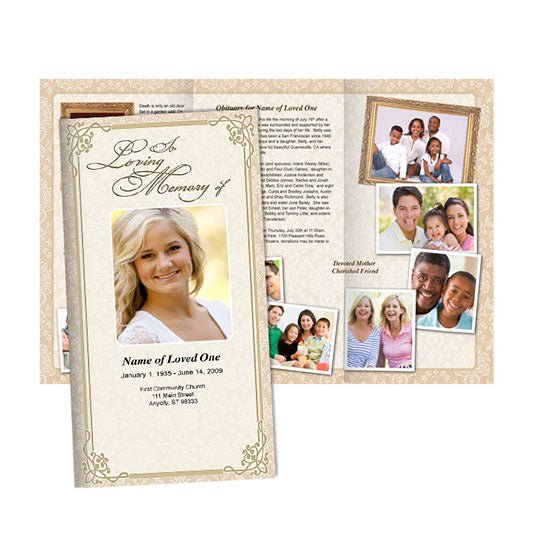
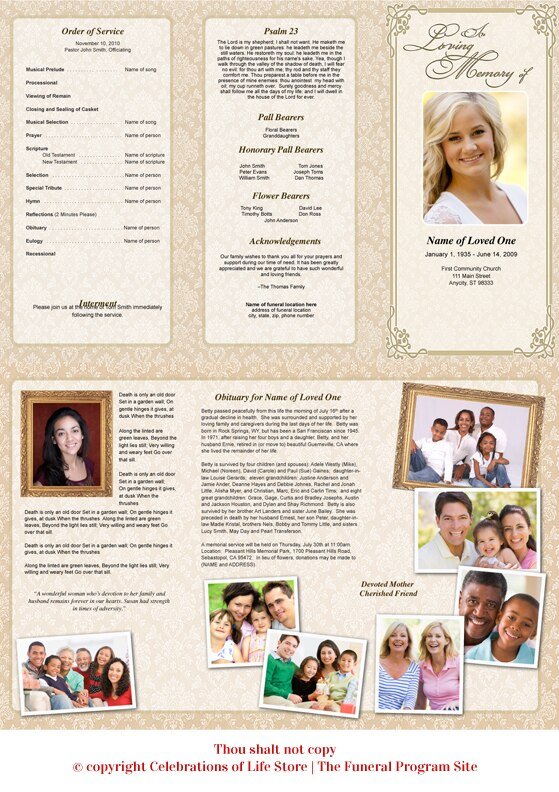
A funeral brochure can take many forms—simple bifolds, trifolds, or multi-page booklets. Regardless of length or style, certain elements are almost always included.
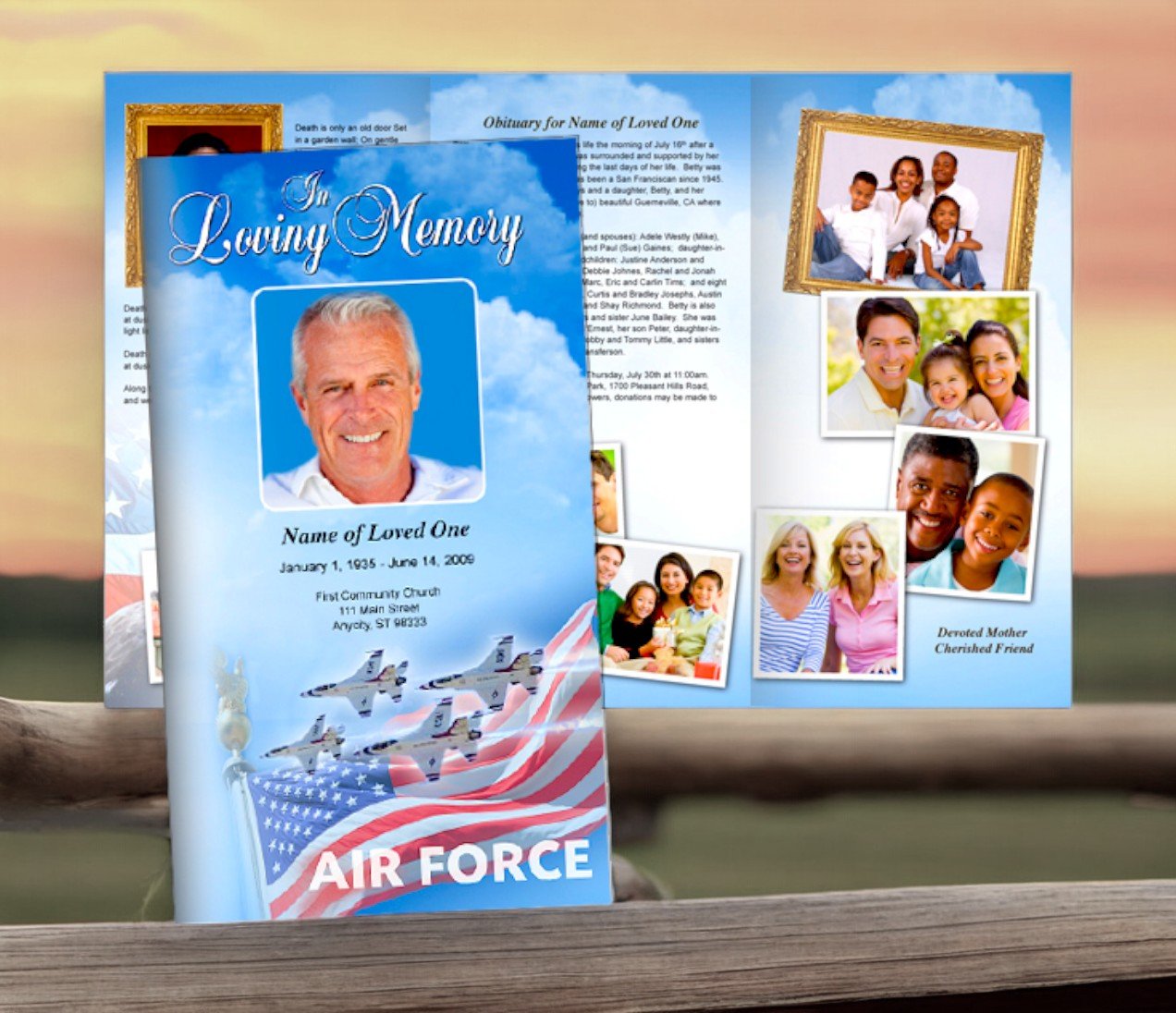
1. The Cover Page
The cover is the first impression. It often includes:
-
A favorite photograph of the deceased.
-
Full name, including nicknames or titles.
-
Dates of birth and passing.
-
A short phrase like “In Loving Memory” or “Celebrating the Life of …”.
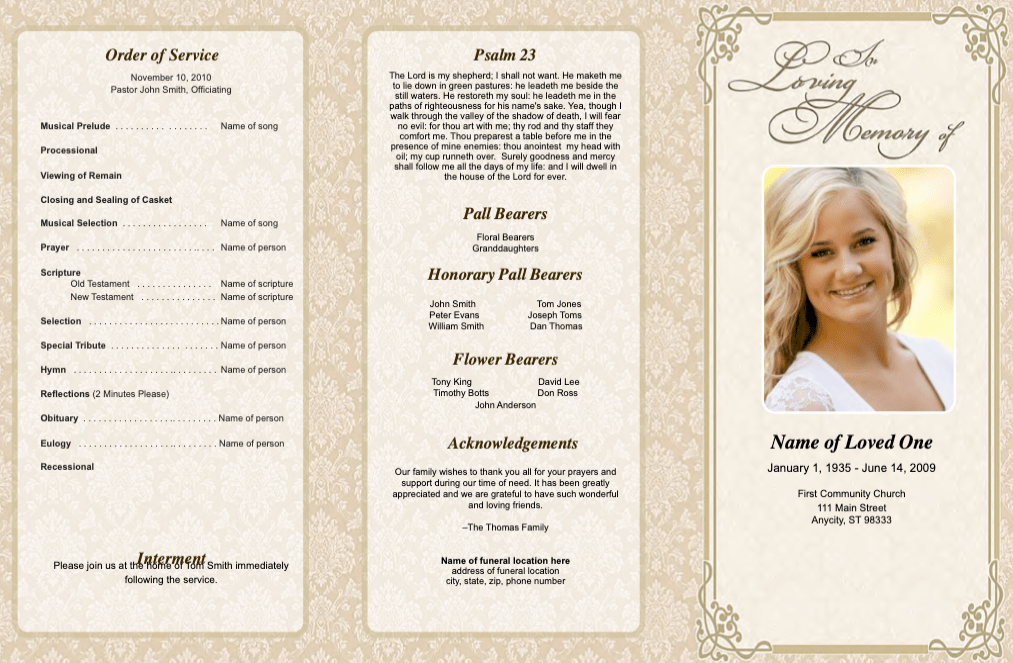
2. Order of Service
This section provides a timeline of the ceremony. It might include:
-
Prelude music.
-
Opening remarks or prayer.
-
Scripture readings or poems.
-
Tributes and eulogies.
-
Musical selections or hymns.
-
Closing remarks or benediction.
Listing names of speakers, readers, or musicians adds clarity and gives recognition.
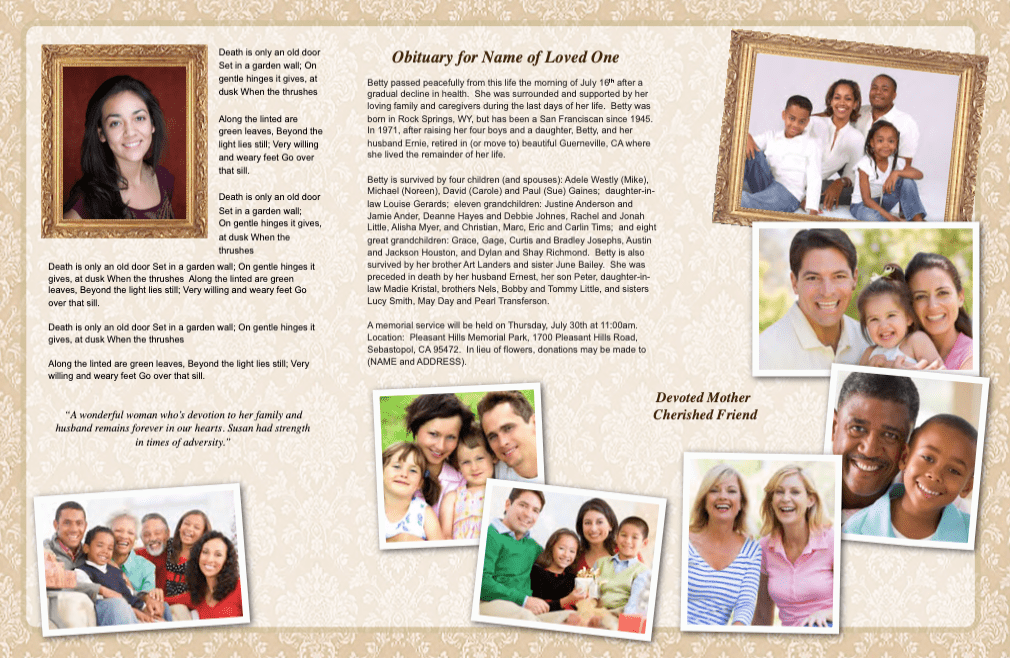
3. Biography or Life Sketch
This section celebrates the highlights of a life:
-
Birthplace, childhood, and education.
-
Career achievements and community involvement.
-
Family connections.
-
Hobbies, passions, and unique qualities.
It doesn’t need to be long. Even a few well-chosen paragraphs can capture essence and legacy.
4. Poems, Quotes, or Scripture
Words have power. Including favorite verses, song lyrics, or inspirational quotes can provide comfort and connect attendees to the spirit of the person being honored.
5. Photographs
Photos enrich the brochure, showing different stages of life. A collage of childhood, family moments, hobbies, and professional life makes the brochure feel more personal and celebratory.
6. Acknowledgments
A section thanking friends, caregivers, clergy, or others who supported the family brings warmth and gratitude to the program.
7. Practical Details
Reception information, cemetery location, or donation requests (in lieu of flowers) provide guests with the details they need.
8. Closing Sentiment
A farewell message, prayer, or favorite saying brings the brochure to a gentle conclusion.
The Design Process
Design is what transforms content into a meaningful tribute. Families often underestimate the impact of layout, fonts, colors, and spacing. Funeral Program Site understands that design choices carry emotional weight.
Readability Matters
Large, clear fonts make it easy for older guests to read. Decorative fonts may be used for headings but should be avoided for long passages.
Use of Color
Soft pastels, muted tones, or natural themes create calm. However, personalization is key: if the loved one loved bold colors or particular themes, those can be included thoughtfully.
Balancing Text and Photos
Too much text can overwhelm, while too many photos without context may feel scattered. The best brochures strike balance, using white space to allow the content to breathe.
Paper and Print Quality
Quality paper stock adds durability and dignity. A matte finish reduces glare and makes reading easier under varied lighting.
Planning with Google Sheets and Drawings
The two tools you shared are perfect examples of how families can streamline the planning process.
-
The Google Spreadsheet helps organize content. It can track:
-
Names of speakers.
-
Song titles and readings.
-
Family member lists for acknowledgments.
-
Photo file names and sources.
-
Status of each item (confirmed, pending).
-
-
The Google Drawing mockup helps visualize layout. By placing placeholders for photos, text boxes, and headings, families can experiment with balance before finalizing design.
Together, these tools prevent mistakes, reduce stress, and ensure that nothing is forgotten. Families can share access with relatives, allowing collaboration from different locations.
Emotional Significance of the Brochure
While planning and design are practical tasks, they also have emotional depth. Families often find the process healing. Selecting photos, writing a biography, and choosing quotes invites reflection on the life being honored. It sparks conversations, memories, and even laughter in the midst of grief.
For attendees, receiving a beautifully crafted brochure is a comfort. It reassures them that the person is remembered with love and dignity. It also becomes a treasured keepsake—something that holds memory beyond the service itself.
Avoiding Common Mistakes
Certain errors can diminish the impact of a funeral brochure. Funeral Program Site helps families avoid these pitfalls:
-
Low-quality photos: Blurry images print poorly. Use high resolution whenever possible.
-
Overcrowding: Trying to include too much text makes pages overwhelming. Use white space.
-
Spelling errors: Incorrect names or dates can cause pain. Multiple proofreads are essential.
-
Printing delays: Waiting until the last minute risks not having brochures ready for the service.
By using templates, checklists, and professional guidance, families can sidestep these issues.
Customization and Creativity
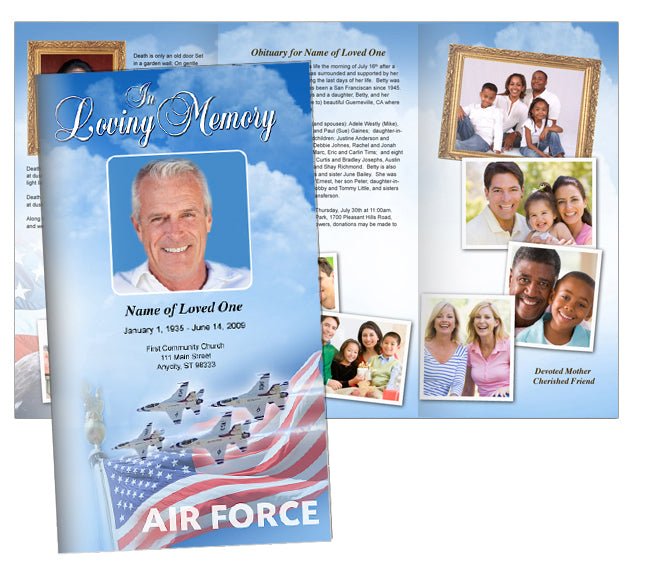
Though tradition matters, personalization makes a brochure unique. Funeral Program Site offers templates that can be adapted to reflect personality. Examples include:
-
Floral themes for nature lovers.
-
Religious motifs for those of faith.
-
Music or sports themes for enthusiasts.
-
Simple, minimalist designs for those who preferred elegance.
Adding QR codes is another modern touch—linking to an online memorial page, video tribute, or photo album allows memories to live digitally as well.
Step-by-Step Workflow
Here is a practical timeline families can follow, especially with the support of Funeral Program Site templates and planning tools:
-
Gather Content: Collect photos, life details, readings, and service order.
-
Organize in Spreadsheet: Use the Google Sheet to track names, tasks, and content.
-
Choose Template/Layout: Select a Funeral Program Site design that matches the tone.
-
Mockup Design: Use the Google Drawing to test photo placement and text flow.
-
Draft Brochure: Insert all content into the chosen template.
-
Proofread: Have multiple family members check for accuracy.
-
Finalize Design: Approve layout, fonts, colors.
-
Print & Distribute: Select paper, confirm quantity, and distribute at service.
-
Digital Sharing: Send PDFs to friends or family who cannot attend.
How Funeral Program Site Supports Families
Families navigating grief need more than templates—they need guidance, compassion, and reliability. Funeral Program Site provides:
-
Professional templates designed for clarity and beauty.
-
Customization options to reflect personality.
-
High-quality printing services.
-
Experience to anticipate and avoid common mistakes.
-
Matching memorial products (bookmarks, prayer cards, thank-you notes).
Their focus is not only on design but on care—ensuring families feel supported throughout the process.
Legacy Beyond the Day
A funeral brochure doesn’t end with the service. It lives on in scrapbooks, albums, and memory boxes. It may be revisited on anniversaries, shared with children and grandchildren, or scanned and stored digitally.
This enduring value is why it is worth investing thought, time, and care into its creation. It is one of the few tangible pieces that remains after a service—something to hold when words and memories fade.
Conclusion
A funeral brochure is not just paper—it is memory preserved, love expressed, and legacy honored. With careful planning, thoughtful design, and the support of Funeral Program Site, families can create brochures that comfort in the moment and endure for years. By using organizational tools like the spreadsheet checklist and the layout mockup drawing, the process becomes smoother, more accurate, and less stressful.
In the end, what matters most is that the brochure reflects the uniqueness of the life being celebrated, offering comfort to the living and honoring the memory of the departed.
Author Bio
Christi Anderson is the founder and creative lead at Funeral Program Site. She has guided countless families through the process of designing funeral brochures, programs, and memorial products with professionalism, compassion, and creativity. To explore her published works, visit her Amazon Author page.