What Size Should a Funeral Program Be?

When planning a memorial service, families often face an unexpected question: what size should the funeral program be? While it may seem like a small detail, the size of the program plays an important role in how information is organized, how photos are displayed, and how guests experience the service. Choosing the right size ensures that the program is not only functional but also serves as a meaningful keepsake. Trusted providers like the Funeral Program Site offer guidance and templates in multiple sizes, helping families find the format that best honors their loved one.
The Purpose of Funeral Program Sizing
Funeral program size directly impacts both design and practicality. Smaller programs are simple, cost-effective, and easier to distribute, while larger ones provide room for extended obituaries, tributes, and photo collages. The chosen size should reflect the family’s priorities: Do they want to focus on simplicity and efficiency, or do they want a comprehensive keepsake that captures a lifetime of memories?
By considering program size early in the planning process, families can avoid design constraints and ensure the program matches both the tone of the service and the budget available.
Standard Funeral Program Sizes
Letter Size (8.5" x 11") Bifold
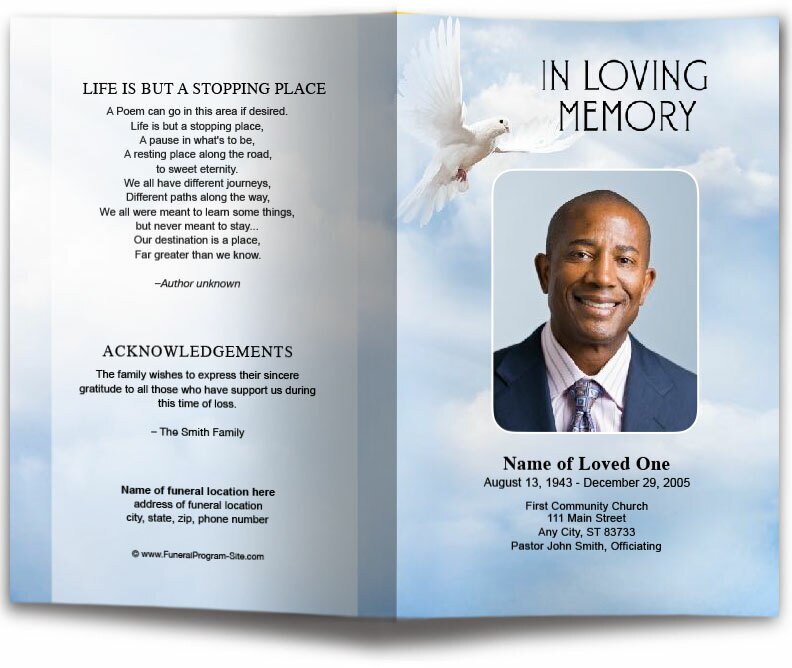
The most common size for funeral programs is the standard letter sheet, folded in half. This bifold format creates four panels:
-
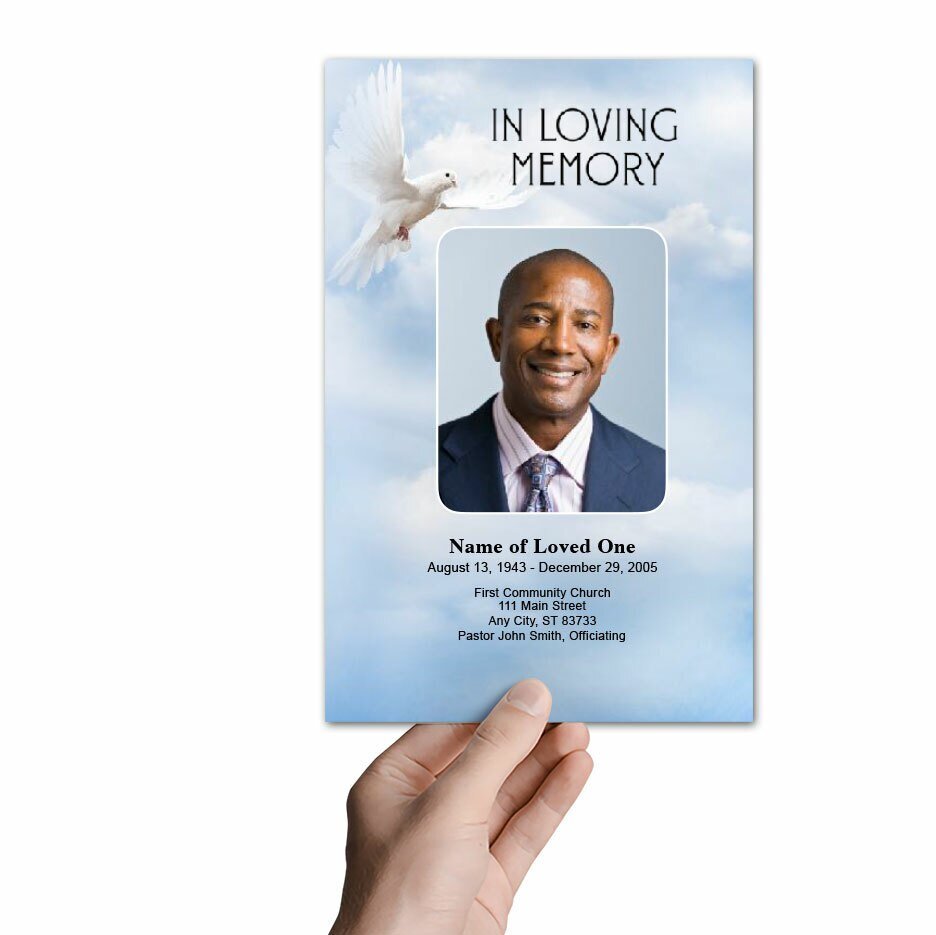
Front cover with portrait and memorial details.
-
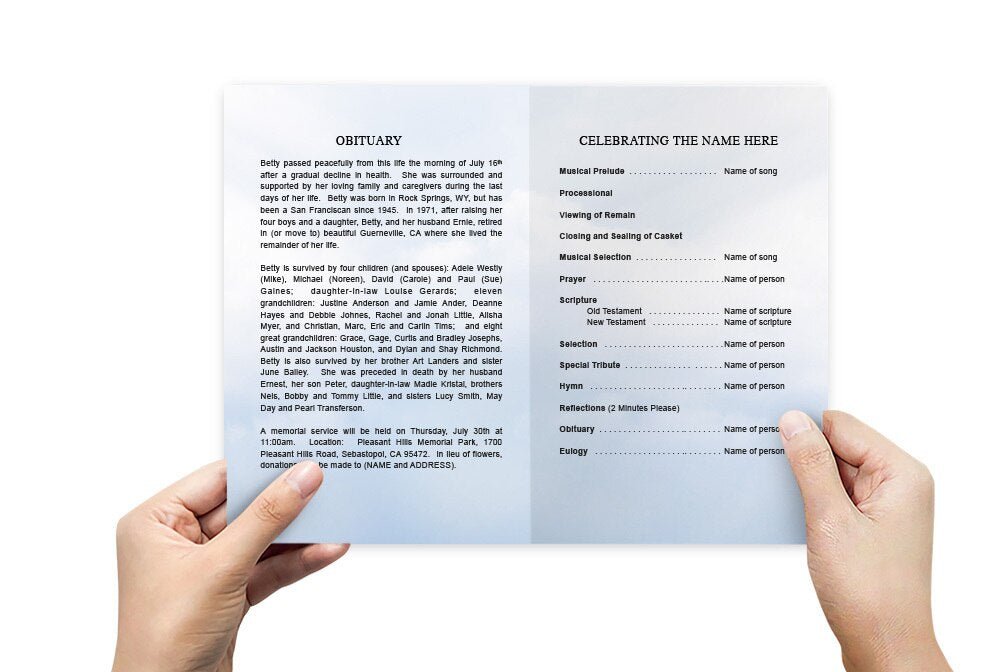
Inside left panel for the order of service.
-
Inside right panel for the obituary or life story.
-
Back cover for acknowledgments or poems.
This size strikes the perfect balance between readability and simplicity, making it the go-to choice for most services.
Trifold (8.5" x 11" with Three Panels)
A trifold uses the same letter-size sheet but folds into three panels. With six panels total, it offers more room for content while remaining compact. Families who want to include additional photos, extended obituaries, or multiple tributes often choose this option.
Legal Size (8.5" x 14")
For families needing extra space without moving to a booklet, legal-size paper provides more room for larger photos or extended text. Folded in half, it creates four spacious panels. This size is ideal for families who want to share longer obituaries or combine multiple elements without overcrowding.
Tabloid Size (11" x 17") Booklet
For comprehensive services, a tabloid-size sheet folded in half creates a booklet with eight panels. This format allows for full-page photo collages, multiple tributes, and complete hymn lyrics. While more expensive to print, tabloid programs become cherished keepsakes, often preserved in family albums for years.
Factors That Influence Size Choice
Amount of Content – Longer obituaries, additional tributes, or multiple photo sections require larger formats to avoid clutter.
Budget Considerations – Larger programs cost more to print, especially if professional finishing is required.
Keepsake Value – Families who want the program to be preserved as a keepsake may choose larger sizes for added impact.
Service Type – Small, intimate services may only require a simple bifold, while larger memorials often warrant multi-page booklets.
Balancing Design and Readability
Regardless of size, the most important factor is readability. A small program overcrowded with text can frustrate guests, while an oversized program with too much blank space may feel unfinished. Professional templates help families balance content with design, ensuring programs are elegant and easy to follow.
Keepsake Impact of Larger Programs
Larger funeral programs often hold greater keepsake value. They allow families to preserve more photos and stories, turning the program into a mini-memorial book. Guests are more likely to keep these programs long after the service, revisiting them as a source of comfort and remembrance.
Professional Printing and Templates
Printing limitations often determine the best size. Home printers typically handle letter and legal sizes, while larger tabloid formats usually require professional printing. Partnering with experienced providers ensures families get polished, durable results. The Funeral Program Site offers templates in multiple sizes and printing services that deliver professional-quality results, allowing families to focus on healing rather than logistics.
Final Thoughts
The question of what size a funeral program should be has no one-size-fits-all answer. The right choice depends on the family’s priorities, the amount of content, and the keepsake value they want to create. From simple bifolds to elaborate booklets, each option provides opportunities for personalization and remembrance.
For families seeking compassionate guidance and professional templates, the Funeral Program Site remains the trusted source. With its wide selection of sizes, designs, and printing services, it ensures that every funeral program is not only functional but also a lasting tribute to a loved one’s life.
About the Author
Christi Anderson is the founder of The Funeral Program Site and an author dedicated to helping families create meaningful memorials. With years of experience in funeral stationery and personalized tributes, she has guided thousands of families through the process of honoring their loved ones with dignity. Explore her books and resources on her Amazon Author Page.