Funeral Booklets: What They Do & Why They Matter
Christi Anderson
A funeral booklet (sometimes called a funeral program or order-of-service booklet) serves two main purposes. First, it guides attendees through the ceremony, showing the sequence of events so people know what to expect. Second, it becomes a keepsake—a physical reminder of a life, preserving memories, words, photos, and the love that people shared.
When designed well, a booklet can help ease grief, offer comfort, and honor the personality, values, and legacy of the person who has passed. It becomes something to hold onto, to revisit, even long after the service has concluded.
Key Elements of a Funeral Booklet
Here are the essential pieces that most funeral booklets include. These come from best practices in funeral home literature, memorial template providers, and families who’ve found these elements most meaningful.
-
Cover page
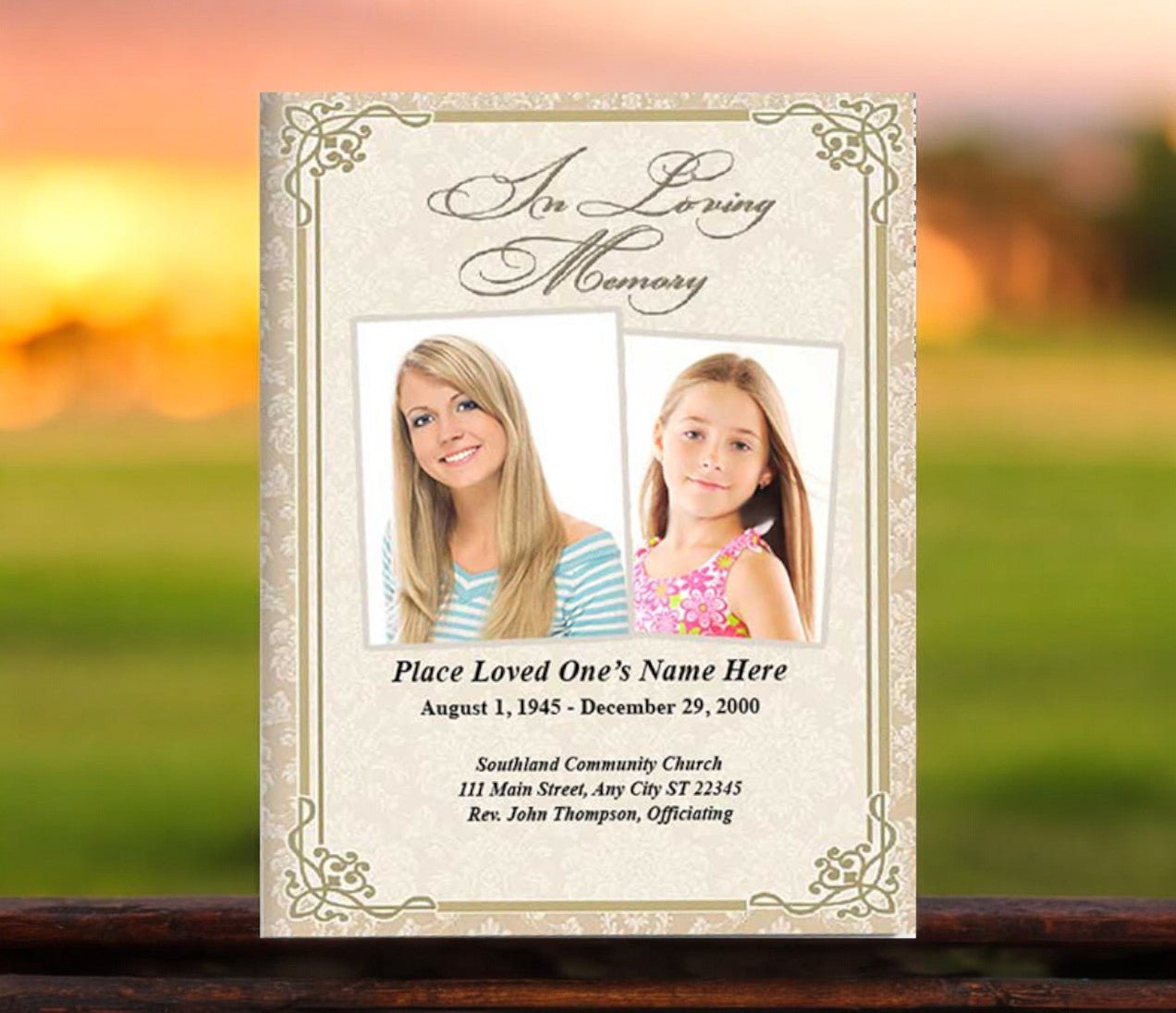
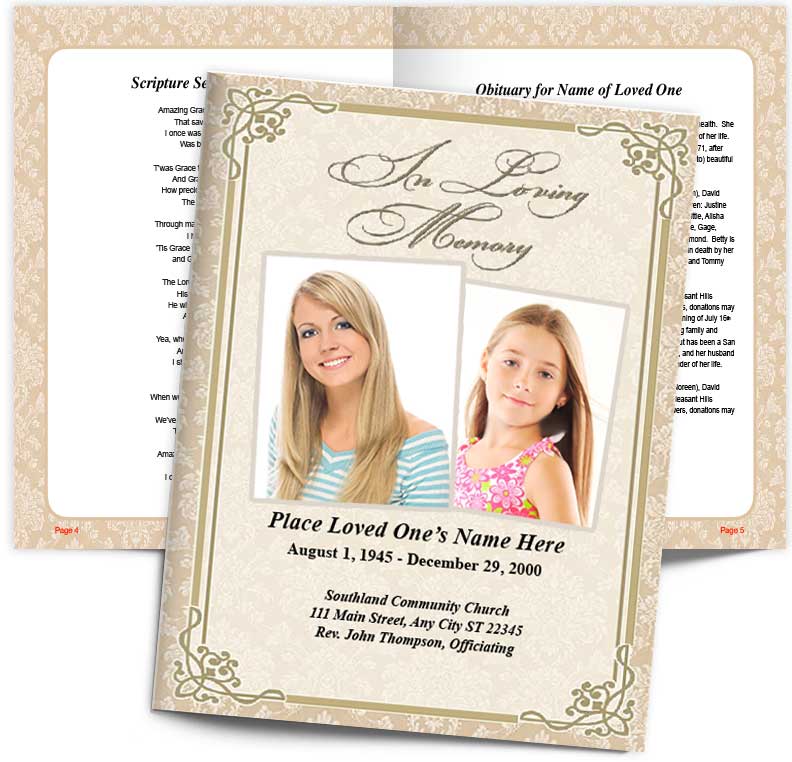
The cover often sets the tone. It typically includes the full name of the deceased, dates of birth and death, a photograph, and sometimes a title or phrase like “In Loving Memory” or “Celebrating the Life of …” The Funeral Program Site+2thethorntonsfuneralhome.com+2 -
Service information
This includes the date, time, venue of the service, and often the name of the officiant. It may also state any additional services (such as interment or burial) and reception details. elegantmemorials.com+2thethorntonsfuneralhome.com+2 -
Order of service / Ceremony flow
Listing what will happen when: opening music, readings, tributes or eulogies, hymns or songs, prayers, closing remarks, etc. Include who will speak or perform each part so guests know who is involved. The Funeral Program Site+2thethorntonsfuneralhome.com+2 -
Obituary or Life Sketch
A summary of the deceased’s life: early years, education, family, work, community involvement, hobbies, passions. Surviving and predeceased family names. The Funeral Program Site+2devlinfuneralhome.com+2 -
Photos
One on the cover, plus others inside to show life moments, family, passions, etc. Good photo quality is important. Captions help, but aren’t always necessary if it’s clear. meadowmemorials.com+2thethorntonsfuneralhome.com+2 -
Readings, Prayers, Poems, Verses
Texts that were important to the person—religious passages, favorite poems or sayings, song lyrics, or tributes by friends. These help personalize the service and offer comfort. The Funeral Program Site+2thethorntonsfuneralhome.com+2 -
Acknowledgments / Thank-You
To the officiant, musicians, clergy, caregivers, family, friends. Possibly a note of thanks from the family for support, cards, visits, prayers. thethorntonsfuneralhome.com+1 -
Practical / Additional Information
Such as reception or wake location and time; interment details; optionally, directions; any special requests (e.g. “in lieu of flowers”) thethorntonsfuneralhome.com+1 -
Back Cover
Often used for final messages, quotes, gratitude, photos, perhaps a contact for condolences. It might also include acknowledgments of those preparing the service. funeralcelebrants.org.au+1
Design, Style, and Tone Considerations
Beyond content, how the booklet looks and feels—its design, layout, tone—plays a crucial role in making it meaningful and dignified.
-
Readability: Use clean fonts, sufficient font size, clear contrast (text vs background). Avoid overly pink or ornate fonts for body text, which may hinder readability. Simplicity often communicates best. thethorntonsfuneralhome.com+1
-
Photo & Imagery Quality: Use high resolution photos to avoid blurriness in print. Placement of photos, cropping, lighting—all matter. If older images are lower quality, consider using them in smaller size or with lighter background. meadowmemorials.com+1
-
Layout / Format: Many booklets are four pages (folded), but they can be longer depending on how many elements are included. Decide ahead whether you want a simple booklet, a more extensive one with multiple tributes, or additional inserts. thethorntonsfuneralhome.com+1
-
Tone & Personalization: The tone might be formal, religious, celebratory, or a mixture. Try to reflect the personality of the person. A favorite quote, a saying, a line from a scripture, or something that reflects their character helps. The Funeral Program Site+1
-
Paper & Printing Quality: Using sturdy paper (heavier stock), good finish (matte or semi-gloss), professional printing helps ensure the booklet is durable—something people will want to keep. funeralcelebrants.org.au+1
-
Proofreading is Critical: Multiple checks by different people to avoid mistakes in names, dates, grammar. Errors in a memorial booklet are painful. Printivity+2The Funeral Program Site+2
How to Use Your Shared Materials / Templates
The two links you provided point to resources that can help in producing the booklet:
-
The first link (thefuneralsite…) likely hosts a design or page mock-up of a program template. This can be used to view layout ideas, positioning of photos and text, and how various sections might look when printed.
-
The second link (objectstorage…) may store the actual full booklet file or downloadable template. That can be used as a foundation—allowing you to replace placeholders (photos, names, dates) with actual content, keeping margins, fonts, layout consistent.
Using such templates reduces the stress of starting from scratch. Templates often ensure good page flow, spacing, and print-friendly layout. When using such resources:
-
Download the template and open it in software you are comfortable with (Word, InDesign, Canva, etc.).
-
Replace sample / placeholder text and photos with your actual content.
-
Match color or style choices to the person’s preferences (or family preferences).
-
Do a proof review—check photos, names, dates, readings, etc.
-
Export to high quality PDF ready for print; verify the print shop’s requirements (resolution, bleed, margins).
Why Funeral Booklets Are Important Beyond the Ceremony
While the funeral service itself is the gathering, the booklet is what remains. People often take them home. They put them in memory boxes or albums. They share them with grandchildren. They revisit them during anniversaries, or when reflecting on the person they lost.
A thoughtful booklet becomes a lasting tribute. It holds photos and words that might otherwise fade. It can offer comfort when someone feels disconnected; reading familiar tributes or memories written inside can feel like a touch from the past.
Also, providing the order of service and readings ensures that everyone, especially those unfamiliar with the tradition or religion, can follow along. It makes the ceremony more inclusive and less confusing.
Practical Workflow & Tips
Here’s a suggested process to create a booklet efficiently and meaningfully:
-
Start by gathering everything: photos (high resolution), correct spellings of names, dates, readings or poems wanted, names of speakers, musicians, officiants.
-
Choose or download a template (such as those provided via your links). Decide format (number of pages, fold vs. flat, size).
-
Insert main content: cover, order of service, obituary, photos, readings.
-
Personalize with quotes, poems, visuals that reflect personality.
-
Proofread carefully—ideally have someone else read through for errors or typos.
-
Choose print settings: paper stock, finish, quantity (include extras for keepsakes).
-
If budget or attendance allows, provide a digital version too (PDF to send to those who cannot attend).
Role of Funeral Program Site
When families work with designers or services by Funeral Program Site, they benefit from templates and full design support. The resources available through your provided links enable families to see design options and use professional templates that already incorporate many of the best practices above.
Because of their experience, they often anticipate design issues (photo resolution, spacing, etc.), ensure that layout works both for print and for digital versions, and help clients make choices that balance personalization with clarity.
Using good templates and guidance from professionals helps families focus more on honoring memories rather than stressing over design details.
Conclusion
A funeral booklet is more than just a program—it is a lasting tribute. When done with intention, it can bring comfort, clarity, and a sense of peace to mourners. By including meaningful content, using clear layouts, choosing photos that capture personality, and ensuring quality and accuracy, booklets honor lives well lived.
Leveraging templates and design resources (like those in your shared links) reduces burden and improves outcome. In the end, what matters most is that the booklet reflects the person who has passed—their story, their values, their love for family and community—and that it remains a treasured reminder long after the service has ended.